Quick Takeaways (13 min read)
- ▸48km gorge reveals 2 million years of human evolution through layered deposits
- ▸Mary Leakey discovered 1.75-million-year-old 'Nutcracker Man' skull in 1959
- ▸First proof that Africa (not Asia) is the birthplace of humanity
- ▸Homo habilis fossils show earliest tool use - simple stone choppers and scrapers
- ▸Easy stop between Serengeti and Ngorongoro - museum visit plus gorge walk
Between the endless plains of the Serengeti and the rim of the Ngorongoro Crater lies a windswept canyon that holds secrets spanning millions of years. Olduvai Gorge – often called the 'Cradle of Mankind' – is one of the most important paleoanthropological sites on Earth, where discoveries have fundamentally changed our understanding of human evolution and our African origins.
A Window into Deep Time
Olduvai Gorge is a steep-sided ravine carved by ancient water flow through layers of volcanic ash and sediment in the Great Rift Valley. This 48-kilometre-long canyon cuts through deposits up to 100 metres deep, creating a geological layer cake that spans nearly 2 million years of Earth's history. Each layer represents a different era – ash from volcanic eruptions, lake sediments from wetter periods, and soil from ancient savannahs. For scientists, it's like reading a book where each page reveals another chapter in the story of early humans and the animals that lived alongside them.
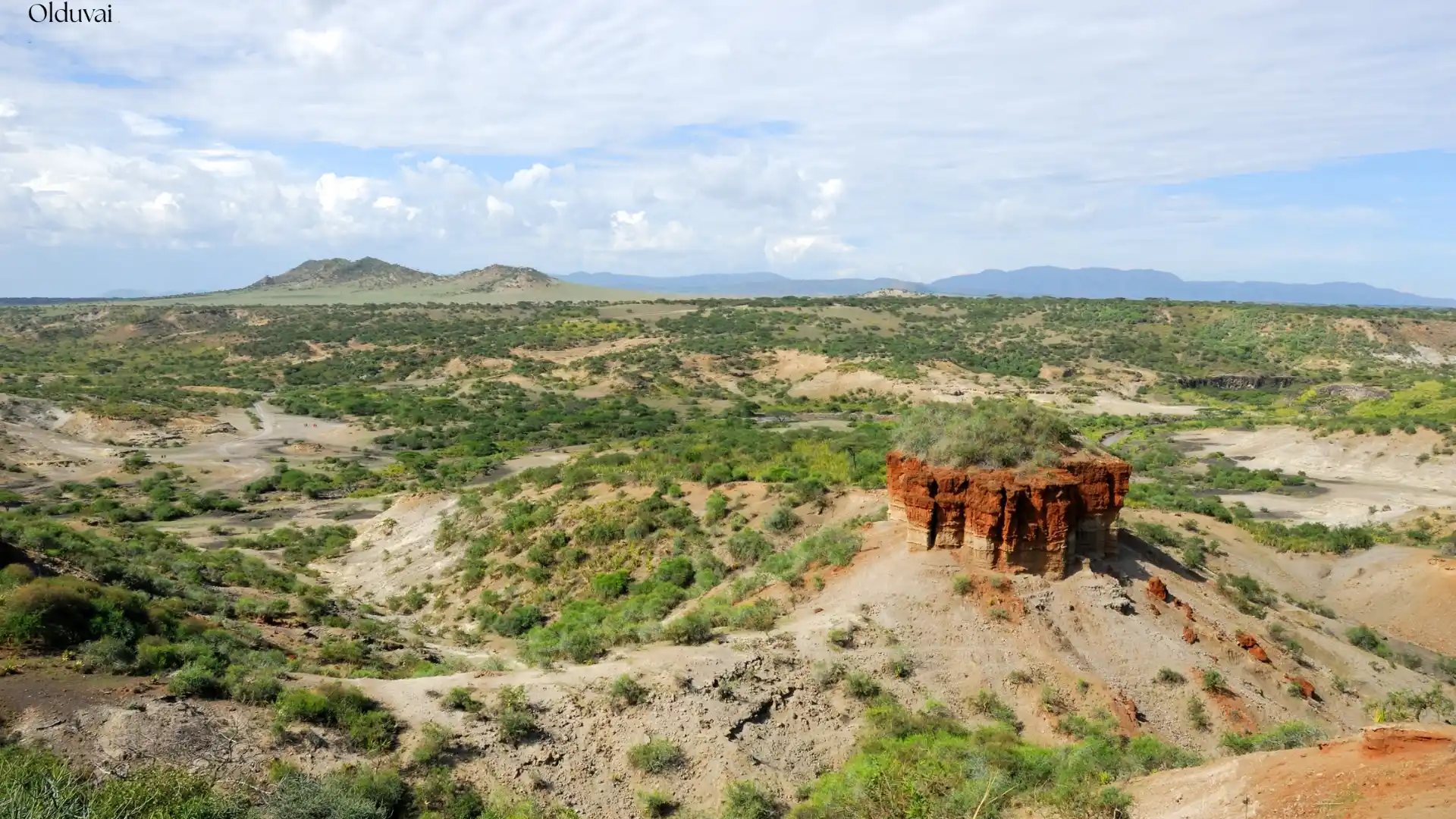
The name 'Olduvai' is actually a British mispronunciation of the Maasai word 'Oldupai', meaning 'the place of the wild sisal' – a reference to the spiky plants that grow throughout the gorge. While the correct name Oldupai is increasingly used, Olduvai remains familiar to most people worldwide. Standing at the gorge's rim and looking across the layered rock faces, you can see the same landscape that our earliest ancestors would have known – though the climate and vegetation were quite different then.
The Leakey Family Legacy
The story of Olduvai Gorge is inseparable from the Leakey family, whose dedication to this site transformed our understanding of human origins. British paleoanthropologists Louis and Mary Leakey began excavations here in 1931, enduring harsh conditions, limited funding, and decades of painstaking work. Their persistence paid off dramatically in 1959 when Mary discovered a 1.75-million-year-old skull embedded in the gorge wall. This hominin, nicknamed 'Nutcracker Man' for its powerful jaw and enormous teeth, was formally named Zinjanthropus boisei (now reclassified as Paranthropus boisei).
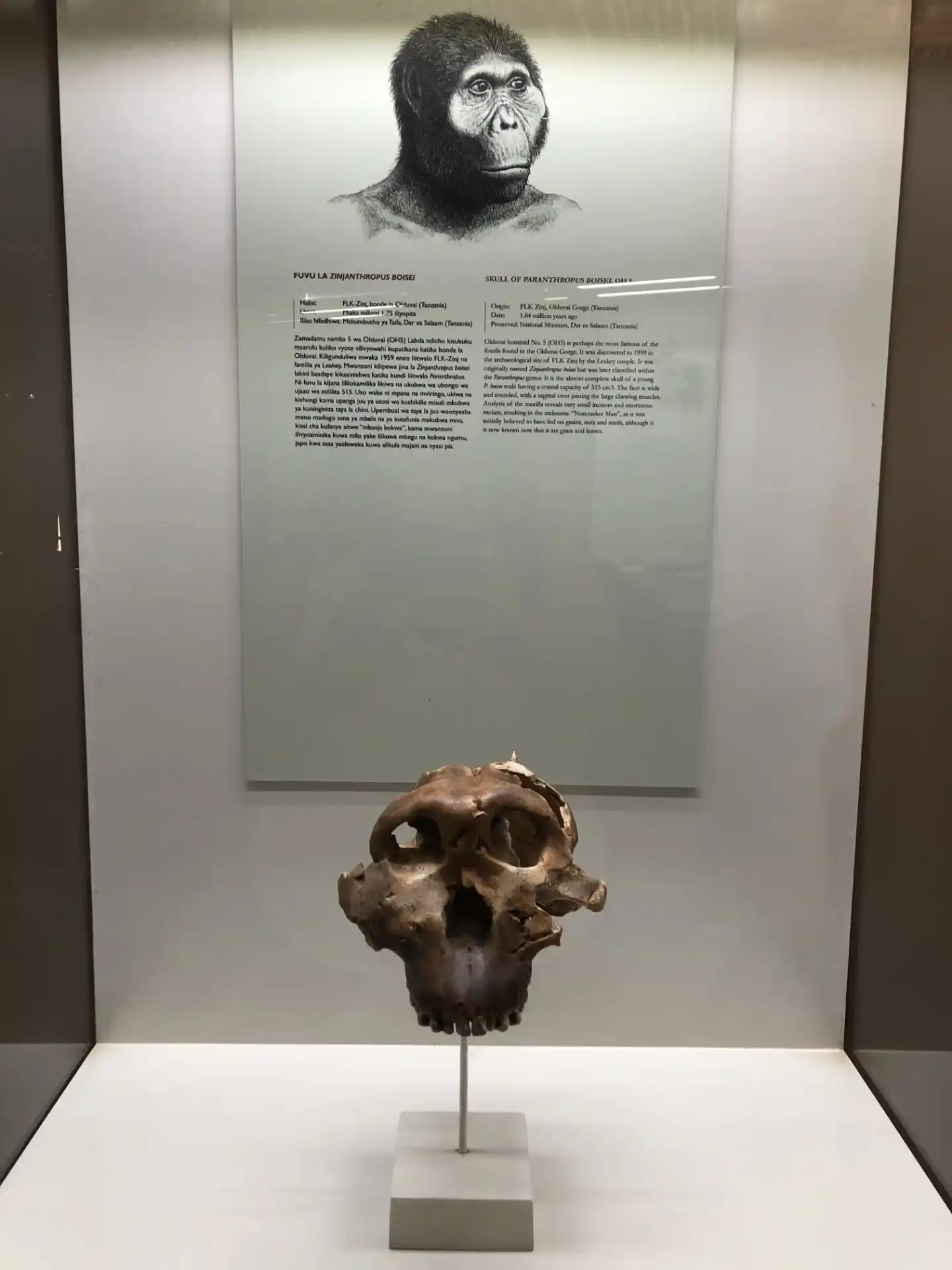
This discovery electrified the scientific world and secured funding for continued research. More importantly, it proved Africa – not Asia as many believed – was the birthplace of humanity. The Leakeys went on to find fossils of Homo habilis ('handy man'), one of the earliest members of our own genus Homo, dating back 1.8 million years. Their son Richard Leakey and grandson continue the family's paleoanthropological work today, making East Africa's Rift Valley the epicentre of human origins research.
Evidence of Our Earliest Ancestors
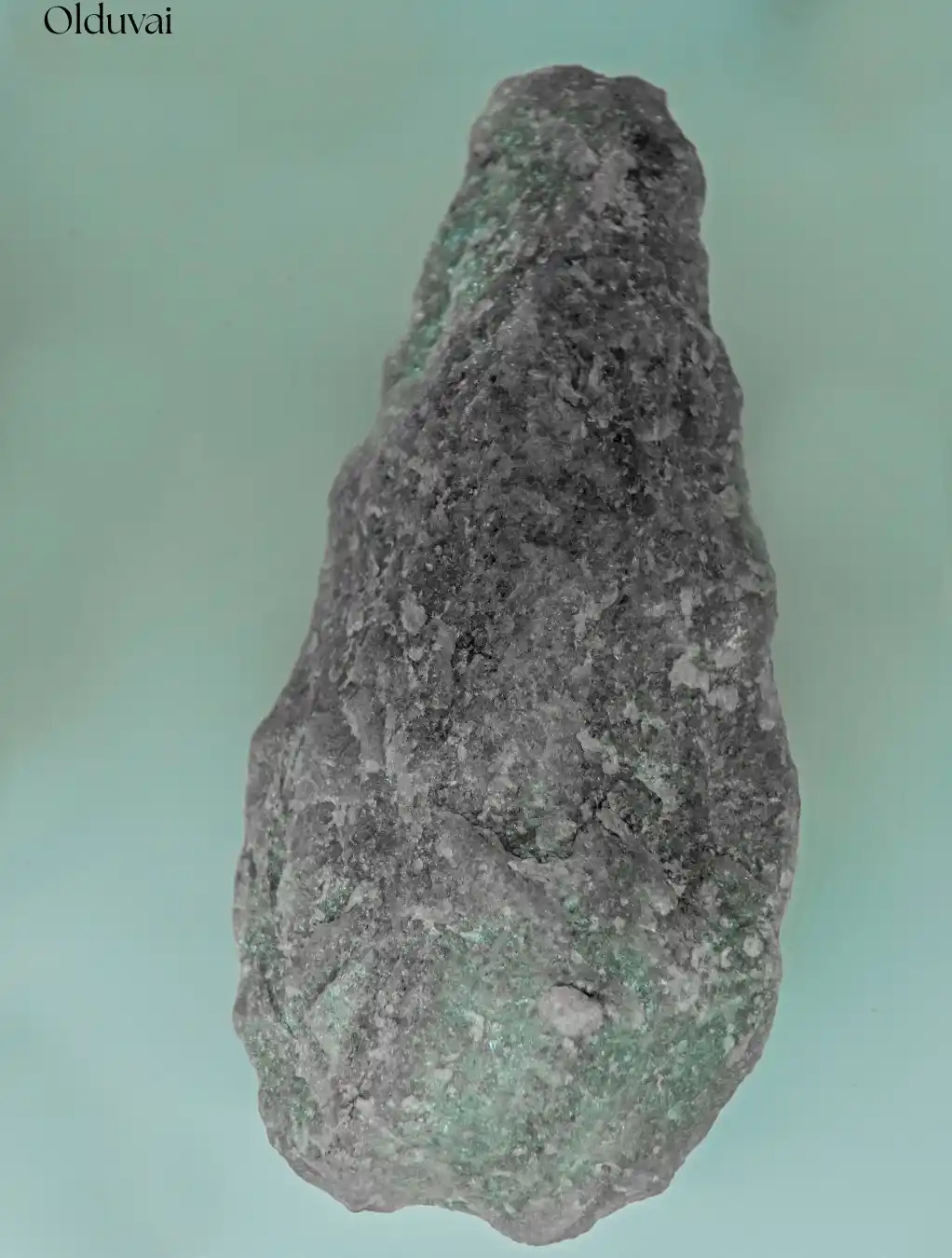
What makes Olduvai Gorge so valuable to science is the combination of well-preserved fossils and the stone tools found alongside them. The gorge has yielded remains of several hominin species – early human ancestors and relatives – showing that multiple species coexisted in this landscape millions of years ago. Homo habilis made simple stone choppers and scrapers known as Oldowan tools, some of the earliest evidence of technology use by our ancestors. Later inhabitants used more sophisticated Acheulean hand axes, demonstrating the evolution of cognitive abilities and manual dexterity.
Beyond hominin fossils, Olduvai has revealed extinct animals that shared this ecosystem – giant relatives of modern elephants, massive predatory cats, ancient horses, and enormous buffalo species. Together, these fossils paint a picture of a landscape alternating between grassland and woodland, with rivers and lakes attracting concentrations of animals – and the early humans who hunted them. The preservation is remarkable: some sites contain living floors where ancient humans camped, complete with stone tools, animal bones from butchered prey, and even possible evidence of rudimentary shelters.
The Geological Story
Olduvai's scientific value stems from its exceptional geological context. The Great Rift Valley's volcanic activity provided a crucial ingredient for preservation: layers of volcanic ash that buried bones and artifacts, protecting them from decay and providing a chemical signature that allows precise dating. Each major eruption created a distinct layer that can be traced across the region, functioning like timestamps in the geological record. This allows scientists to date fossils with remarkable accuracy, placing them in chronological order and tracking evolutionary changes over time.
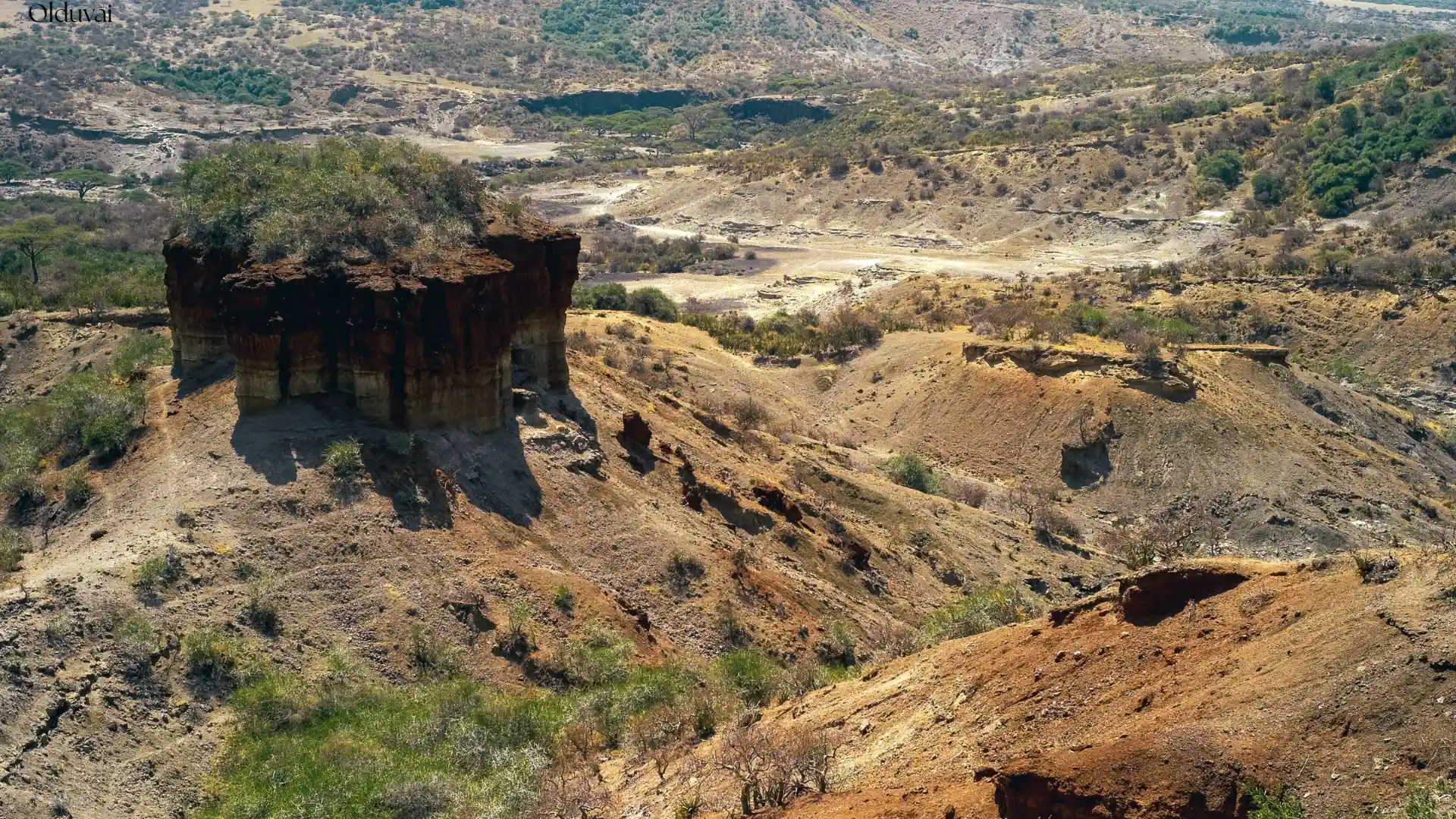
The gorge itself was formed relatively recently in geological terms – likely starting around 500,000 years ago when seasonal rivers began cutting through the sediment deposits. This erosion exposed the ancient layers, bringing fossils to the surface where they could be discovered. Without this natural excavation, the treasures of Olduvai might still be buried deep beneath the modern landscape.
Visiting Olduvai Gorge Today
Olduvai Gorge is located in the Ngorongoro Conservation Area, about 45 kilometres from the Ngorongoro Crater rim along the road toward Serengeti. Most safari itineraries that include both destinations pass right by the gorge, making it an easy and worthwhile stop. The Olduvai Gorge Museum, perched on the edge of the gorge with stunning views, houses replica fossils (the originals are in Dar es Salaam and international museums), displays of stone tools, and informative exhibits explaining the site's significance.
Visitors can take a guided walk down into the gorge itself, standing at actual excavation sites where hominin fossils were discovered. Your guide will explain the geological layers visible in the gorge walls and point out the different sediment types that tell the story of environmental changes over millions of years. It's a humbling experience to stand in the exact spot where a human ancestor walked 1.8 million years ago – before modern humans existed, before Homo erectus migrated out of Africa, at the very dawn of our genus.
Why Olduvai Matters
Olduvai Gorge is more than an archaeological site – it's a place that fundamentally changed how we understand ourselves. Before the Leakeys' discoveries, many scientists believed human evolution occurred primarily in Asia or Europe. Olduvai proved definitively that Africa is humanity's ancestral homeland, the place where our lineage began. Every person alive today, regardless of where we now live, traces our ancestry back to these East African landscapes.
The gorge also demonstrates the deep connection between environmental change and human evolution. Our ancestors adapted to dramatic climate shifts, from wetter periods with forests and lakes to drier times with expanding grasslands. These environmental challenges may have driven key evolutionary innovations – walking upright to cover greater distances, developing larger brains to solve problems, creating tools to process food, and eventually developing language and culture. Olduvai preserves evidence of these crucial transitions.
A Sacred Landscape
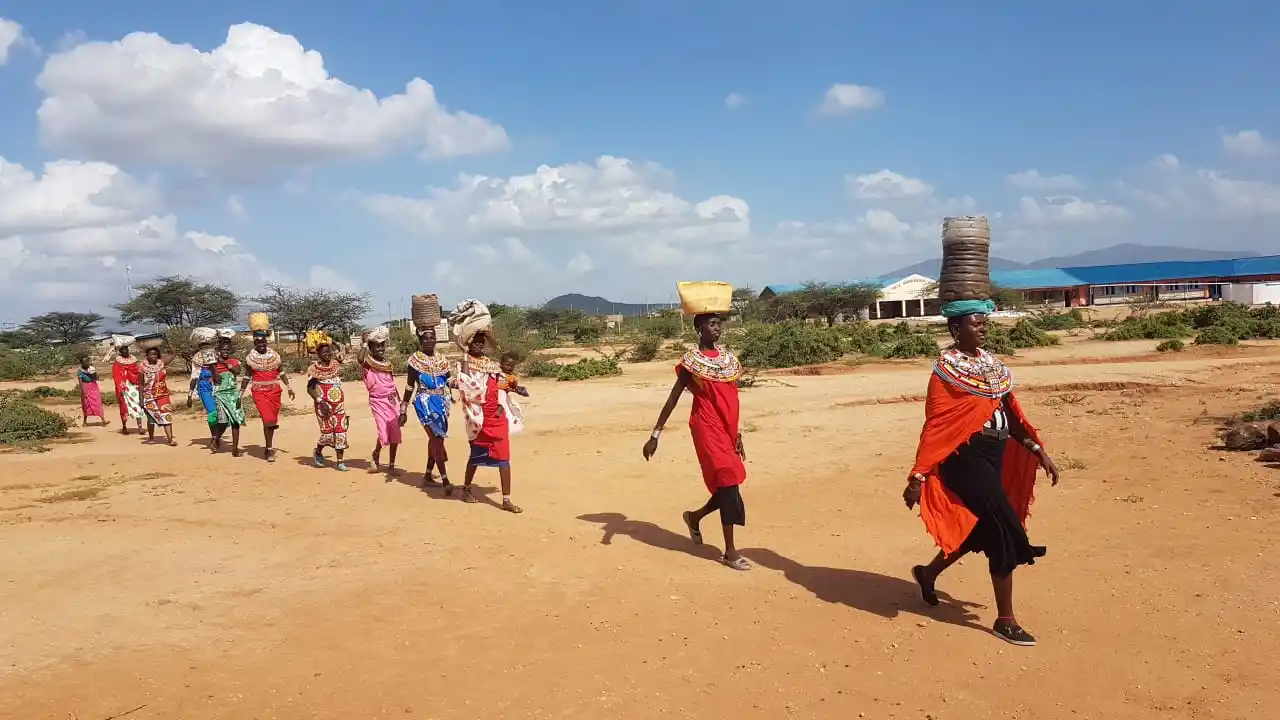
For the Maasai people who inhabit this region, the gorge holds different but equally profound significance. According to Maasai tradition, this landscape is where their ancestors emerged and where important cultural ceremonies take place. The area's spiritual importance to the Maasai adds another layer to Olduvai's meaning – it's not just scientifically important, but culturally sacred. Respectful visitors recognize they are guests in a living landscape that holds meaning for both scientific understanding and indigenous heritage.
Combining Science with Safari
Olduvai Gorge fits perfectly into a northern Tanzania safari circuit. After watching lions hunt on the Serengeti plains or witnessing the Great Migration, a stop at Olduvai provides context: these same landscapes supported not just wildlife but early humans, and the animals we see today are descendants of the species our ancestors hunted. The connection between past and present becomes tangible. At Porcupine Tours, we always recommend including an Olduvai stop when travelling between Serengeti and Ngorongoro – it adds minimal time but provides maximum perspective.
The gorge reminds us that wildlife conservation and human heritage are intertwined. The Serengeti ecosystem is not just important for elephants and wildebeest; it preserves landscapes that witnessed the emergence of our species. When you protect these wild places, you protect the story of humanity itself. That's a conservation message that resonates deeply – we're not just saving nature 'out there', we're preserving the environment that made us who we are.
Planning Your Visit
A stop at Olduvai Gorge typically takes 1-2 hours, including museum visit and guided gorge walk. The museum is open daily, and entrance fees support ongoing research and conservation. The site can be hot and exposed, so bring sun protection, water, and comfortable walking shoes for the descent into the gorge. Photography is permitted, and the dramatic landscape with its colourful geological layers makes for striking images. Early morning or late afternoon light is particularly beautiful, casting long shadows that emphasize the gorge's contours.
For those wanting a deeper experience, consider spending extra time at the site or arranging a specialized tour with an archaeologist guide who can provide expert insights into fossil discoveries and excavation methods. The Ngorongoro Conservation Area Authority occasionally offers special access to active research sites, though this requires advance arrangement and depends on ongoing excavations.
What the Fossils Tell Us About Daily Life
The fossils and artifacts at Olduvai reveal fascinating details about how our ancestors lived. Analysis of animal bones shows cut marks from stone tools, indicating systematic butchering of prey. The distribution of tools and bones suggests that early humans had home bases or camps where they returned repeatedly, processing meat and making tools in communal spaces. Some sites preserve circular arrangements of stones that may have supported windbreaks or simple shelters – evidence of planning and construction skills. The presence of ochre (red earth pigment) at some sites hints at symbolic thinking, though we can't know if it was used decoratively, ceremonially, or simply as an adhesive for tool-making.
Study of tooth enamel chemistry reveals what these early humans ate – a varied diet including meat, tubers, seeds, and plant materials. Unlike modern humans who are heavily dependent on just a few staple crops, our ancestors were opportunistic omnivores who exploited whatever food sources the changing environment provided. This dietary flexibility was probably crucial to survival during climate fluctuations. The discovery of tools made from stone sources 10-15 kilometres away shows that these groups ranged widely across the landscape, had knowledge of resource locations, and perhaps engaged in exchange with neighboring groups.
The Scientific Debate and Discovery Process
Olduvai has been at the center of major debates in paleoanthropology. When the Leakeys first classified Homo habilis as a separate species, many scientists disagreed, arguing the fossils were simply small variants of later Homo erectus. Decades of subsequent discoveries vindicated the Leakeys' interpretation. Similarly, the dating of Zinjanthropus using then-new potassium-argon methods was initially controversial but proved revolutionary, pushing human origins back far deeper in time than most scientists had imagined. These scientific debates continue today, with researchers re-examining old finds using modern methods and making surprising discoveries.
The work at Olduvai exemplifies how scientific knowledge evolves. Early excavations by the Leakeys used basic tools and methods, carefully mapping each find by hand and photographing sites with large-format cameras. Today's researchers employ GPS mapping, 3D laser scanning, ground-penetrating radar to locate buried fossils, and sophisticated laboratory analysis of everything from pollen grains (revealing ancient vegetation) to stable isotopes (revealing ancient climate). DNA analysis, impossible in the Leakeys' era, now allows us to extract genetic information from some fossils, revealing previously unknown human relatives and migration patterns. The same sites excavated decades ago yield new insights when revisited with modern techniques.
Climate Change and Human Evolution at Olduvai
One of Olduvai's most important contributions is documenting how climate change influenced human evolution. The sediment layers record dramatic environmental shifts – from periods when the gorge area was covered by a large lake, to drier times when grasslands dominated, to wetter periods when forests expanded. These changes happened on timescales of thousands to tens of thousands of years, forcing our ancestors to adapt or perish. Some scientists argue that it was precisely this environmental instability in the East African Rift Valley that drove the evolution of human intelligence, flexibility, and tool use. Species that could adapt to changing conditions thrived; those that couldn't went extinct.
The fossil record at Olduvai shows how different hominin species responded to these changes. Some, like the robust australopithecines with their massive jaws adapted for grinding tough vegetation, seem to have specialized for specific foods and environments. When conditions changed, they disappeared. Others, like early Homo species with larger brains and more versatile tools, could exploit a wider range of food sources and habitats. This adaptability allowed them to survive and eventually spread beyond Africa. The lesson from Olduvai is clear: flexibility and innovation in response to environmental change have been fundamental to human success.
The Cultural Impact Beyond Science
Olduvai Gorge has influenced far more than scientific knowledge – it has profoundly shaped how humanity thinks about itself. The recognition that all humans share common African ancestors has implications for how we view race, nationalism, and human diversity. The discoveries made people of all backgrounds realize that, genetically speaking, we are one species with a single origin story. This understanding emerged from Olduvai and similar East African sites during the 1960s-70s, coinciding with civil rights movements worldwide and providing scientific support for human unity.
The site has inspired countless books, documentaries, museum exhibits, and popular culture references. The image of Mary Leakey carefully brushing sediment from ancient fossils became iconic, symbolizing patient scientific dedication. Their work demonstrated that transformative discoveries don't always come from high-tech laboratories – sometimes they come from someone willing to spend decades searching in a remote gorge under the African sun. The Leakey story resonates because it shows that persistence, curiosity, and careful observation can answer the most profound questions about who we are.
The Journey Continues
Research at Olduvai Gorge continues today, with new discoveries still emerging from the ancient sediments. International teams of scientists return each year during the dry season to excavate new sites and re-examine known ones. Modern techniques like DNA analysis, isotope dating, and 3D scanning reveal details the Leakeys could never have imagined. Recent discoveries include previously unknown tool types, evidence of very early use of fire, and fossils that suggest even greater diversity of early human species than previously recognized. Each finding adds another piece to the puzzle of who we are and where we came from.
The site also serves as a training ground for the next generation of paleoanthropologists. Students from universities around the world come to Olduvai to learn excavation techniques, fossil identification, and geological interpretation under the guidance of experienced researchers. Many of Tanzania's own archaeologists and paleontologists received their training at Olduvai, ensuring that the country's scientific heritage is preserved and advanced by Tanzanian experts. This knowledge transfer ensures that Olduvai's contributions to science will continue for generations to come.
When you visit Olduvai, you're not just looking at the past – you're witnessing active science that continues to reshape our understanding of human origins. The humble gorge in northern Tanzania remains one of the most scientifically productive sites for understanding human evolution, with new discoveries regularly making international headlines. Few places on Earth offer such a direct, tangible connection to our deepest roots, making Olduvai an essential stop for any thoughtful traveler seeking to understand the epic journey that brought humanity to where we are today.
Written by Porcupine Tours — Your local Tanzania safari experts
Get in touch to plan your safari